
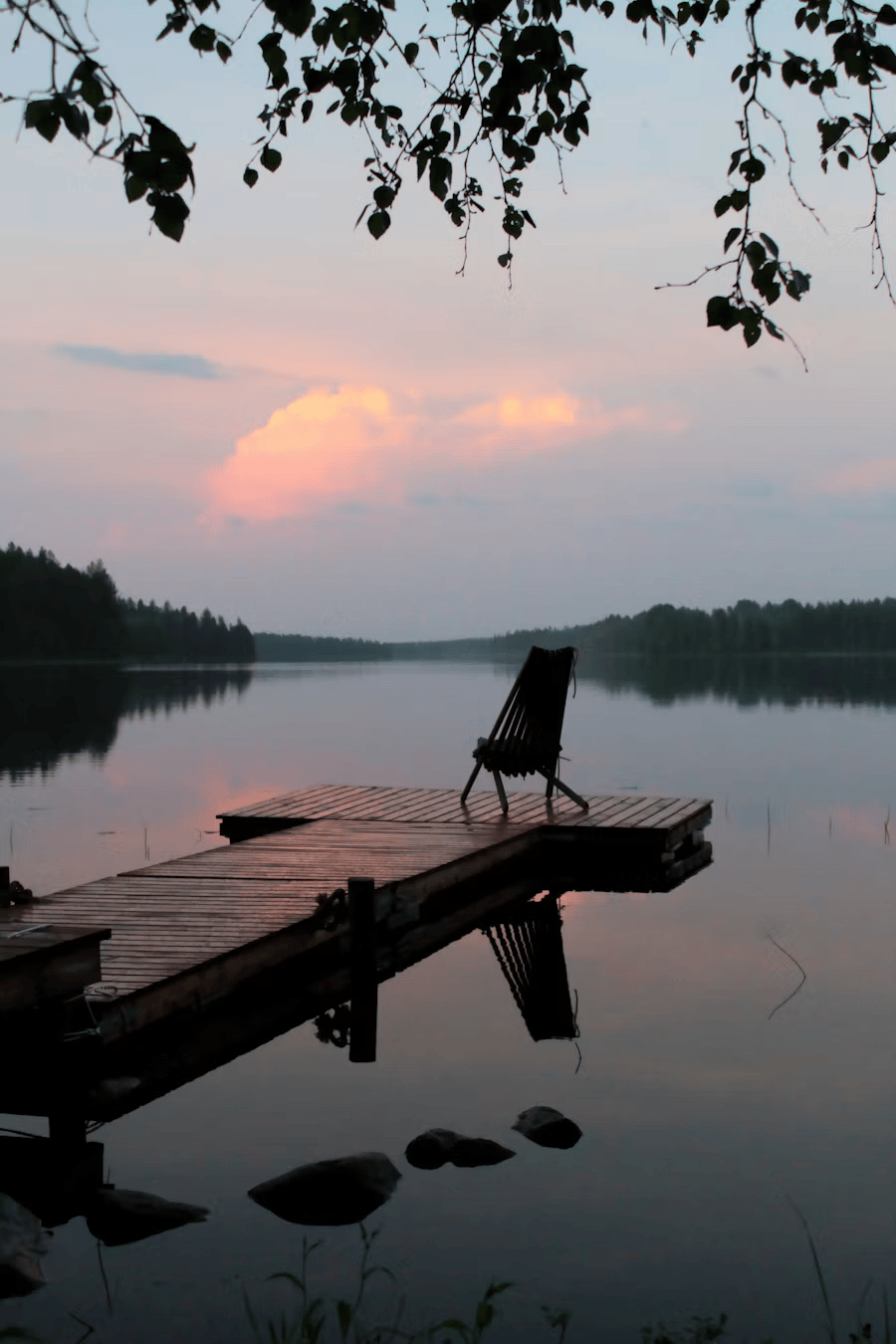
We hear a lot about “regulating the nervous system” these days.Take a deep breath. Meditate. Do some yoga. Practice mindfulness. While there is certainly value in these practices, sometimes I think we have made nervous system regulation much more complicated than it needs to be. Maybe the first step of “regulating your nervous system” is to not call it that, not make it into a checklist or protocol and just be. Our ancestors lived in ways that naturally gave their nervous system opportunities to move between activity and rest. They walked long distances. They spent time outside. They gathered around fires. They sang. They worked with their hands. They ate meals together. They prayed. They rocked babies. They told stories. They experienced darkness at night and sunlight in the morning. None of these things were called “nervous system regulation.” They were simply part of being human. Our nervous system is constantly taking in information from our environment and deciding, in very broad terms, whether we are safe enough to rest, digest, connect, repair, and restore, or whether we need to stay alert and ready to respond. So perhaps one of the best ways to regulate your nervous system is not to constantly do something to it, but to give it the environmental signals it has been expecting for thousands of years. Here are a few of my favorite ways to do that.
Go Outside Without Turning It Into a Workout
There is a difference between exercising outside and actually being outside. Try taking a walk without headphones. Don’t track your steps. Don’t listen to a podcast. Don’t make it productive, just look around. Notice the trees, the wind, the temperature, the sounds of birds, the movement of clouds, the feeling of the ground beneath your feet. Let your eyes move across the landscape instead of remaining fixed on a screen. This is essentially an ancient practice hiding inside a modern wellness term “forest bathing”. Research has found associations between forest exposure and lower cortisol, heart rate, and measures of stress, although the evidence is not perfect and the mechanisms are still being studied. There is something important about allowing the nervous system to receive information that is not an email, notification, deadline, or artificial alarm. Nature does not ask you to respond to it, it simply asks you to notice.
Hum, Sing, Chant, or Recite Something Slowly
This one is particularly interesting to me because humans have been singing, chanting, praying, and reciting poetry, scripture for thousands of years. Long before we understood the vagus nerve or heart-rate variability, people were using the voice rhythmically. Try humming for a few minutes. Sing a familiar song. Recite a prayer, poem, or passage that you know by heart. You don’t have to be “good” at singing. The point isn’t performance, rather it is rhythm, sound, breath, vibration, and repetition. Slow breathing itself has been shown in systematic reviews to increase vagally mediated heart-rate variability and influence autonomic regulation. Singing and chanting naturally tend to slow and organize breathing, while also providing rhythmic auditory stimulation. There is something else here that modern life has largely removed from us: using our voices together. There is a reason humans have always gathered to sing.
Walk But Do It Slowly
Walking is almost too ordinary for us to take seriously. But maybe that is the point. Walking is repetitive, rhythmic movement. It gives the body predictable sensory input through the muscles, joints, vestibular system, and feet. It also allows us to visually orient ourselves to our surroundings. Try a slow walk without a destination. Walking just notice your surroundings, smile at passers-by, listen to the birds, step on the crunchy leaves. Notice how calming it is to put one foot in front of the other without asking the body to accomplish anything more than that.
Use Heat The Old-Fashioned Way
Humans have been using heat therapeutically for a very long time, saunas, steam rooms, hot springs, warm baths, or simply a hot shower and peace and quiet. Heat temporarily challenges the cardiovascular system, followed by a period of recovery. Interestingly, research on sauna bathing has found that during the recovery period after sauna exposure, heart-rate variability increased, suggesting increased parasympathetic activity, but I think there is another reason these practices can feel so restorative. Warmth communicates something to the body. Warmth, stillness, quiet, and reduced sensory demands can create an environment very different from the constant stimulation of modern life. Sometimes sitting somewhere warm and doing absolutely nothing is all you need to reset.
Rocking and Rhythmic Movement
We instinctively rock babies when they cry. We rock when we are frightened. We sway when we hear music. We pace when we are thinking. We tap our feet when we’re nervous. We seem to have an innate relationship with rhythm and repetitive movement. Try gently rocking in a chair, swaying from side to side, or taking a slow rhythmic walk. This is especially interesting because contrary to what most of us think, mindfulness and regulation isn’t necessarily about becoming completely still, not much in nature is actually still. Sometimes the body needs movement before it can settle. If you are feeling restless, agitated, or overstimulated, forcing yourself to sit perfectly still and “calm down” may not be the most natural first step, sometimes you need to move the energy through you.
What I love about these practices is how unremarkable they are. None of them are “trendy”, require an expensive device, an app, or a complicated protocol. They are things humans have been doing for thousands of years without calling them “nervous system regulation.” Walking, singing, gathering around warmth, moving rhythmically, and spending time in nature are things that are naturally part of our existence, they are part of the environment our bodies evolved within. Perhaps instead of constantly trying to teach the nervous system how to calm down, we can start giving it more of the signals it already recognizes. Sometimes regulation isn’t about adding one more thing to our routine. It is about slowing down enough to return to the things we have slowly moved away from.


Leave a Reply